Honestly, picking the right Terminal Battery in 2026 comes down to what it’s actually going to do. A vehicle battery, a backup system, an industrial machine—those can put you in very different situations. So check things like voltage, capacity, peak current, and how long it needs to keep running. And don’t skip the manual: it’ll tell you the terminal type, position, and dimensions you need to match. When it comes to terminals, fit is everything. If the placement isn't right, you might have a tough time installing it—or worse, you could end up with a connection that just isn't secure.
First, think about where the battery will actually be operating. Heat, cold, vibration, or even just poor airflow—any of those can mess with performance and how long the battery lasts. And don't just look at the capacity number. Compare the manufacturer’s specs, warranty terms, and maintenance guidance side by side. If it's rechargeable, check the chemistry and charging requirements, because a charger built for one battery type might not work for another. If you're unsure about the wiring or the application itself, ask a qualified technician—no shame in that. Little details really do count.
Price isn’t everything, honestly. You’ve also got to think about whether replacements are easy to get, how often the thing needs inspecting, and what downtime could really cost you over the battery’s lifespan. And don’t just trust the ideal rating—look at the actual load your equipment handles. That first estimate might be off. So before you buy, double-check it against how things run in the real world. In this guide, I’ll walk you through comparing common specs, checking terminal compatibility, and weighing the practical trade-offs. Really, the whole point is to make a choice you can stand behind—one that’s grounded in what’s actually needed, not just whatever looks good on a label or sounds like a decent guess at the time.

Identify the Device and Its Power Requirements
Identify the device before comparing battery sizes. A starter battery for a car must deliver a strong burst of current, while a backup unit may need steady output for hours. Check the equipment label and manual for voltage, capacity, required starting current, and charging limits. Do not assume that a battery with the same dimensions will meet the same load. Small details matter.
Searches for “Terminal Battery Car” can make terminal style seem like the main decision, but electrical fit comes first. Confirm the positive and negative post positions, terminal type, and cable reach; reversed posts can leave cables too short. Then compare the battery’s chemistry with the vehicle’s charging system, since some systems require a compatible battery type. Consider local temperatures and typical trip length, too. Frequent short drives may not fully recharge a battery. Measure twice. A technician can verify fit and charging requirements when the manual is unclear; guessing from a photo is tempting, but it can miss a small, costly mismatch.
How to Choose the Right Terminal Battery in 2026
Identify the device and check its required battery chemistry and voltage before comparing capacity or runtime.
These are typical nominal cell or pack voltages, not device-specific recommendations. Actual voltage varies during use. Always match the terminal’s specified voltage range, chemistry, connector, and current requirements.
Compare Battery Chemistries and Their Trade-Offs
Lead-acid batteries remain a practical choice for cost-sensitive starting and backup needs. They tolerate brief, high-current bursts, but repeated deep discharges can shorten service life. Absorbed glass mat batteries resist spills and handle vibration better, though they usually cost more. Lithium iron phosphate batteries are lighter and suit frequent cycling, but require compatible charging controls and protection electronics. No chemistry wins every job.
The International Energy Agency’s Global EV Outlook 2024 reports that lithium iron phosphate reached about 40% of global electric-vehicle battery demand in 2023. That figure signals wider adoption, not automatic suitability for every terminal battery. The Battery Council International reports a U.S. lead-battery recycling rate near 99%, an important end-of-life advantage. Still, recycling access and performance vary by location and application. I would verify the battery’s required voltage, terminal layout, peak current, temperature range, and charging profile before comparing prices. Small details matter.
Tips: Match the chemistry to use. For a cold-start vehicle, check the specified starting-current rating. For daily cycling, compare usable capacity and cycle-life conditions, not just the headline number. Then confirm the charger supports that chemistry. A mismatch can be costly. I’d also leave room for uncertainty: published cycle-life figures often depend on controlled test conditions.
Match Voltage, Capacity, and Discharge Needs
Match the battery’s nominal voltage to the equipment’s specified input; a close guess can cause faults or shorten service life. Then calculate energy demand: voltage multiplied by amp-hours gives watt-hours, before losses and usable-capacity limits. Check the datasheet’s capacity test rate, temperature, and cutoff voltage. A 100 Ah rating measured over 20 hours may not deliver 100 Ah during a much faster discharge.
Peak current matters too. Motors, radios, and heated components can draw brief surges beyond their average load. Compare that surge with the battery’s continuous and pulse-discharge ratings, and confirm connector and cable limits. NREL’s 2024 Annual Technology Baseline models utility-scale lithium-ion storage at 85% round-trip efficiency and four-hour duration. That is a grid-storage benchmark, not a small-battery specification, but it shows why usable energy and operating conditions matter.
Allow for cold starts and aging. Keep margin. I would verify the actual load with a meter where possible; estimates miss startup spikes surprisingly often. One imperfect detail: devices rarely draw a perfectly steady current. Size from the real duty cycle, then check manufacturer discharge curves rather than relying on amp-hours alone.
How to Choose the Right Terminal Battery in 2026 - Match Voltage, Capacity, and Discharge Needs
| Battery type and common system |
Nominal voltage |
Common capacity range |
Typical discharge guidance |
Common terminal styles |
Often suited to |
| Flooded lead-acid, deep-cycle |
12 V |
About 20–250 Ah |
Often sized for gradual discharge; regularly drawing more than about 0.2C can reduce usable capacity and service life. Follow the battery’s rated discharge curve. |
Post, threaded stud, or dual-terminal designs |
Budget-conscious backup, marine, and recreational use where weight and maintenance are acceptable |
| AGM lead-acid, deep-cycle |
12 V |
About 7–250 Ah |
Many models tolerate moderate discharge better than flooded batteries, but allowable current varies. Check maximum continuous and peak discharge ratings. |
Post, threaded stud, or insert terminal |
Sealed installations, backup power, and applications needing more discharge current than a comparable flooded battery |
| Gel lead-acid, deep-cycle |
12 V |
About 7–200 Ah |
Generally intended for controlled charging and steady loads; high-rate discharge and incorrect charging voltage can shorten service life. |
Post, threaded stud, or insert terminal |
Steady backup and cyclic loads where the charger supports the battery’s specified gel profile |
| LiFePO₄ (lithium iron phosphate), 12 V-class |
12.8 V nominal (4 cells in series) |
About 10–300 Ah |
Some models allow around 0.5C–1C continuous discharge; the battery management system and product datasheet set the actual limit. |
Threaded stud or bolt-on lug terminal |
Frequent cycling, reduced weight, and applications needing a relatively high usable capacity |
| Starting lead-acid battery |
12 V |
Commonly about 30–100 Ah for passenger vehicles; vehicle requirements vary |
Designed for brief, high-current engine starts. Compare the required cold-cranking amps (CCA), not just Ah; it is not intended for repeated deep cycling. |
Top post or vehicle-specific side terminal |
Engine starting when the vehicle’s voltage, CCA, dimensions, and terminal layout match |
Selection check: Confirm the equipment’s voltage, required runtime, continuous and peak current, charger compatibility, physical dimensions, and terminal polarity and size. Capacity ranges are general examples, not guarantees; ratings and allowable discharge differ by model. For a quick estimate, current (A) = power (W) ÷ battery voltage (V), before accounting for conversion losses. A C-rate of 1C means a discharge current numerically equal to the battery capacity in amp-hours—for example, 100 Ah at 1C is 100 A.
Check Terminal Type, Size, and Polarity
Choosing the right terminal starts with matching the connection style, not guessing from the battery’s shape. Compare your vehicle’s existing battery and owner’s manual. Top-post batteries have upright posts; side-terminal designs use threaded connections on the case. A Side Terminal Battery will not fit a top-post cable without the correct vehicle-specific setup. Small differences matter. A terminal that seems close can still leave the cable loose or stressed.
Check terminal size and polarity before buying. Post diameters and thread dimensions can vary, so compare the specifications rather than relying on appearance alone. Look for the positive and negative markings on both the battery and the vehicle cables. Then confirm that the positive cable reaches the positive terminal without crossing or pulling tight. Polarity mistakes can damage electrical components. If the markings are unclear, pause and ask a qualified technician to verify them. It may feel overly cautious, but I would rather check twice than trust a quick glance. Inspect the cable ends for corrosion or wear, too; a new battery cannot fix a poor connection.
Consider Operating Conditions and Expected Service Life
A Post Terminal Battery should match the conditions under the hood, not just the vehicle’s listed voltage. In hot climates, sustained heat can speed up internal aging and increase water loss in some battery designs. Cold starts demand strong starting-current performance, especially after a vehicle sits overnight. Check the manufacturer’s temperature and starting-current specifications against your typical conditions.
Vibration matters, too. On rough roads or in vehicles with firm suspension, a securely mounted battery with suitable case strength may hold up better. Confirm that the posts match the cable clamps and that cables sit without strain. A loose connection can cause starting trouble that looks like battery failure. Small detail, big consequence.
Expected service life depends on use, maintenance, and charging behavior. Frequent short trips may not fully replace the energy used during starting, while long periods of storage can gradually discharge a battery. Consider a design suited to your driving pattern, then check its warranty terms and maintenance requirements. Measure the charging system if a new battery repeatedly weakens. I have seen battery choice blamed too quickly; the charging system, corroded clamps, or poor fit may be the real issue. Temperature extremes still deserve more attention than many buyers give them.
Verify Compatibility, Safety, and Maintenance Requirements
How to Choose the Right Terminal Battery in 2026
A Payment Terminal Battery must match the terminal’s voltage, connector, dimensions, and charging profile. Check the device label and service documentation before ordering. A plug that fits is not proof of electrical compatibility. Small mismatch, big risk. Confirm the chemistry too; lithium-ion and lithium-polymer packs can have different charging requirements.
Safety paperwork deserves a close look. The UN Manual of Tests and Criteria, subsection 38.3, specifies eight tests for lithium battery transport, including vibration, shock, and external short circuit. Ask suppliers for test documentation tied to the exact battery model, not a similar-looking pack. IEC 62133-2 also sets safety requirements for portable sealed lithium cells and batteries. Check the label.
Maintenance affects reliability at the counter. Follow the terminal maker’s charging and storage instructions, keep charging contacts clean and dry, and inspect the casing for swelling, cracks, or heat damage. Log installation dates and note unexpected shutdowns; these details help reveal gradual capacity loss. Don’t assume a battery is healthy because it still powers on. I would also question blanket replacement schedules: usage, temperature, and charging habits vary, and a tidy schedule can hide real problems.
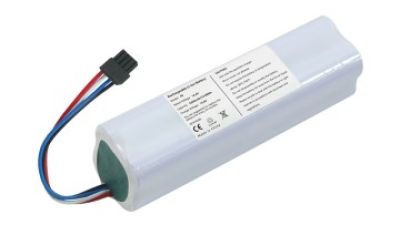
A Practical Guide to Choosing a 14.4V 5200mAh Replacement Battery for the Dreame F9 Vacuum Cleaner
Choosing a replacement battery for an F9 vacuum cleaner starts with matching the voltage, capacity, and physical fit of the original. A 14.4V, 5200mAh battery, rated at 74.88Wh, is designed to provide steady power for routine cleaning and longer sessions between charges. Before purchasing, check the vacuum’s battery specifications and connector so the replacement fits without modifications.
Battery quality and safety features also matter. Long-lasting cells can support dependable use, while a built-in protection circuit helps guard against overcharging, short circuits, and excessive discharge. Look for a battery tested to relevant CE, RoHS, and UN38.3 requirements, and check the warranty terms; a 12–15 month warranty offers added reassurance. Confirm that the product is explicitly listed as compatible with your vacuum model.
For everyday home cleaning, this capacity can help maintain performance on hardwood and tile floors while collecting dust and debris. A replacement from an established battery supplier may be a practical choice for households that want consistent power and straightforward installation. Always follow the vacuum’s charging and care instructions to help preserve battery life.
FAQS
Check the existing battery and your owner’s manual. Top-post batteries have upright posts; side-terminal models use threaded connections. A close match may still fail.
Post diameters and thread sizes can vary. Compare specifications and positive or negative markings. Make sure the positive cable reaches without crossing or pulling tight. Check twice.
Not without the correct vehicle-specific setup. Forcing a mismatch can leave cables loose or strained. Don’t force it.
Match its voltage, connector, dimensions, and charging profile to the device documentation. A plug that fits does not prove compatibility. Check the battery chemistry, too.
Ask for test documentation tied to the exact battery model. Relevant checks may include vibration, shock, and external short-circuit testing. Similar-looking models are not enough.
Follow its charging and storage instructions. Keep contacts clean and dry. Inspect the casing for swelling, cracks, or heat damage. Small details matter.
Not necessarily. Powering on does not prove healthy capacity. Track installation dates and unexpected shutdowns; they may reveal gradual decline.
Treat schedules as a guide, not a guarantee. Usage, temperature, and charging habits differ. I might question a tidy schedule if real-world performance says otherwise.
Conclusion
Choosing the right Terminal Battery in 2026 starts with understanding the device it will power, including its voltage, energy demand, and typical operating pattern. Compare available battery chemistries by weighing factors such as cost, weight, charging behavior, service life, and maintenance needs. Then match the battery’s voltage and capacity to the device, while checking that it can supply the required current during normal use and peak demand.
Physical and environmental fit matters, too. Confirm that the terminal type, dimensions, and polarity are compatible with the device, and consider temperature, vibration, and other conditions where the battery will operate. Before making a choice, verify the manufacturer’s compatibility guidance, safety instructions, and maintenance requirements. A battery that meets both the device’s electrical needs and its operating conditions can provide dependable performance and help avoid premature replacement.