Picking the right China Notebook Battery supplier isn’t just a price comparison anymore. It’s a risk call.
IDC’s Worldwide Quarterly Personal Computing Device Tracker says global PC shipments hit about 262.5 million units in 2024. That rebound means more demand for dependable replacement and original-equipment batteries. At the same time, the International Energy Agency’s Global Critical Minerals Outlook 2024 warns that battery supply chains are still exposed to mineral concentration and processing risks. If you’re sourcing a Notebook Battery from China, those findings are hard to ignore.
Quality has to be visible.
A qualified supplier should be able to show you cell specs, battery-management-system details, cycle-life testing, traceable production records, and recent safety test reports. And before you talk big orders, ask for samples and test them. Check capacity at the rated discharge condition, not just what’s printed on the label. A “6,000 mAh” Battery Notebook can still underperform if its cells, firmware, or protection board aren’t consistent.
Isidor Buchmann, founder of Cadex Electronics and author of Batteries in a Portable World, once wrote, “A battery is like a human being. It can undergo abuse, but not for long.” That still rings true for procurement teams. Heat, overcharging, deep discharge, and storage time can quietly eat into service life.
Don’t trust polished certificates by themselves. Check the lab names, report numbers, production dates, and matching model codes. Visit the factory if you can, or bring in an independent inspection company. Also look at warranty handling, replacement speed, communication quality, and export experience.
The cheapest supplier may end up being the expensive one later.
A reliable China Notebook Battery partner should bring together engineering control, honest documentation, stable cells, and responsive after-sales support. No supplier is perfect. That’s exactly why a structured audit, realistic testing, and continuous review should guide your final choice.
Choosing the best China Notebook Battery supplier starts with a precise device profile. Record the model number, battery part number, voltage, capacity, connector shape, and cell layout. Measure the battery bay, including cable clearance. A battery may fit physically but fail electrically. Check firmware recognition and charging limits. Do not rely on photographs alone. I once missed a connector angle during sampling. The pack seated correctly, but the cable bent sharply.
Ask suppliers for clear datasheets, cell specifications, protection circuit details, and batch traceability. Request samples from the proposed production line, not a different sample room. Test charging, discharge time, temperature, standby drain, and connector stability. A simple test can reveal uneven performance. Place the battery in a notebook, run ordinary office software, and record operating time at regular intervals. Compare results across several units.
Compatibility also includes shipping condition, storage guidance, and replacement support. Confirm whether the supplier can control voltage tolerance and capacity consistency. Review inspection records and applicable safety documentation before placing a large order. My checklist is useful, but it is not perfect. Different notebook revisions can create unexpected problems. Keep one original battery for comparison, and photograph every connection before testing. Small details often decide whether a Notebook Battery performs reliably in daily use.
Choosing the best China notebook battery supplier requires more than comparing quotations. In factory assessments, I examine how quality is controlled daily. Ask for cell specifications, battery drawings, protection circuit details, and recent test records. A capable supplier can explain capacity tolerance, cycle-life results, thermal protection, and charging behavior clearly. Vague answers deserve careful follow-up.
Tips: Visit the production floor when possible. Look for controlled storage, clean assembly stations, calibrated testing equipment, and visible process instructions. Operators should check welding strength, insulation, voltage balance, and connector placement. Request pilot samples from different production lots. Test runtime, standby drain, temperature rise, and notebook fit. Review sample records, not only polished presentations. An impressive factory can still have weak documentation.
Every pack needs traceability from cell batch to final inspection. Confirm aging procedures and failure handling. Ask for safety reports from qualified laboratories, then verify their dates and scope. I also question unusually high capacity claims. Real performance depends on cells, firmware, and operating temperature. No audit is perfect. Keep an approved sample, define acceptance limits, and repeat inspections after production changes. Clear engineering responses should be specific, not promotional. This discipline often reveals problems before users do.
Choosing the best China notebook battery supplier requires more than comparing prices. Safety evidence should guide your decision. Ask whether the supplier provides current test reports for IEC 62133, UN38.3, and applicable regional requirements. Check that certificates match the exact battery model, cell type, and production facility. A document with a different model number is a warning sign. Inspect the battery management system, protection circuit, connector quality, and cell markings. For an Hp Notebook Battery, these details can affect charging stability and daily performance.
Tips: Request samples before placing a large order. Test charging, heat, runtime, and fit in real devices. Ask for batch traceability, incoming cell inspection records, and a written warranty policy. Reliable suppliers should explain their quality process clearly, not simply send attractive certificates. Small details matter. During sample testing, record temperature after two hours of charging and check for unusual swelling, odor, or noise. Stop testing if anything seems unsafe.
Product reliability also depends on consistency between samples and mass production. Review cycle-life data, capacity tolerance, aging controls, and final inspection procedures. A factory visit or independent inspection can reveal storage conditions and assembly discipline. I have learned that a polished report does not guarantee stable production. It should be verified. Suppliers that welcome technical questions, provide corrective-action records, and communicate limitations are usually more dependable. Still, no supplier is perfect, so keep written specifications and test results for every shipment.
Choosing a China notebook battery supplier starts with cell evidence, not a polished quotation. Lithium-ion pouch cells usually reduce weight, while cylindrical cells may simplify cooling. Ask for chemistry, cycle-life curves, impedance data, and thermal-test records. The IEA’s Global EV Outlook 2024 reports average battery pack prices of about $139 per kWh in 2023. Notebook packs may cost more because of smaller volumes, protection circuits, testing, and custom housings. Cheap cells can become expensive inside the keyboard.
Compare capacity in watt-hours, not only milliamp-hours. A 50 Wh pack at 11.1 volts provides roughly 4,500 mAh. Confirm rated capacity at a stated temperature and discharge rate. Battery Life Notebook performance also depends on firmware, screen brightness, and aging. Request samples, then measure runtime under one fixed workload. The IEEE 1725 standard highlights safeguards for rechargeable lithium battery systems. Ask how the supplier controls overcharge, short-circuit, overheating, and swelling risks. Numbers need conditions.
Pricing should separate cells, battery management systems, casing, testing, packaging, and freight. Then examine minimum order quantities. A 100-unit trial can reveal connector errors that a 10,000-unit order hides. That lesson is easy to miss. Request prices at 100, 500, and 1,000 packs, plus replacement terms for failed samples. Review batch records and incoming inspection. One impressive cycle-life chart does not prove stable production. Leave room for doubt.
Compare common notebook battery cell technologies by nominal capacity, indicative pack price, and minimum order quantity. The figures represent realistic procurement benchmarks for standard lithium-ion notebook battery packs and should be verified against current quotations, certifications, cell specifications, and customization requirements.
Pouch cells generally offer flexible shapes and good space utilization, while cylindrical 18650 cells can provide mature supply chains and consistent availability. Prismatic and high-density pouch formats may support larger capacities but often involve higher prices or minimum order quantities. A reliable supplier should be evaluated on safety certifications, cell consistency, battery management systems, testing procedures, warranty terms, and production capacity in addition to price.
Choosing the best China Notebook Laptop Battery supplier requires more than comparing unit prices. Customization should begin with your device model, battery dimensions, connector position, voltage, and capacity target. A capable supplier can review drawings, confirm cell specifications, and produce a sample before mass production. Ask for a clear approval process. Small mismatches can cause installation delays.
Packaging is not decoration. Reliable suppliers use molded trays, protective separators, moisture barriers, and strong outer cartons. Each battery should remain stable during stacking and transport. Request packaging samples and drop-test records when possible. Labels should show model details, production dates, handling symbols, and batch numbers. Poor labeling creates avoidable warehouse mistakes.
Quality control needs measurable evidence. Check whether the supplier performs incoming cell inspection, welding checks, voltage testing, capacity testing, and aging tests. Battery Management System functions should also be verified, including overcharge, over-discharge, and short-circuit protection. Ask for traceability from cells to finished units. Details matter. A supplier may provide impressive reports but weak daily records. That is a warning sign. I would compare approved samples with random production units, not only trust factory promises. Packaging materials may also change without notice, so written specifications and inspection photos are useful. A supplier that accepts corrective actions openly is often more dependable than one claiming perfection. Mistakes happen; hidden mistakes are the real risk.
| Evaluation Area | Key Data Dimension | Recommended Benchmark | Evidence to Request | Risk Signal | Assessment Weight |
|---|---|---|---|---|---|
| Product Customization | Support for voltage, capacity, dimensions, connector, cable length, label, and casing changes | Written specification review with a documented engineering change process | Approved drawings, battery specifications, sample approval records, and revision history | Verbal promises without controlled drawings or revision numbers | 15% |
| Cell Selection | Cell chemistry, nominal voltage, capacity tolerance, cycle life, and cell consistency | Cell model and chemistry are documented; capacity tolerance and test conditions are clearly defined | Cell datasheets, incoming inspection records, capacity test reports, and batch information | Unidentified cells, inconsistent capacity data, or no batch traceability | 12% |
| Battery Management System | Overcharge, over-discharge, over-current, short-circuit, and temperature protection | Protection thresholds are specified and validated against the final battery design | BMS specifications, protection test results, firmware version, and failure-response records | Generic BMS used without electrical compatibility or temperature validation | 12% |
| Prototype and Sampling | Sample lead time, sample quantity, engineering support, and approval procedure | Functional samples supplied before mass production, with written acceptance criteria | Sample quotation, pilot-production plan, approval form, and corrective-action records | Production starts before sample approval or without a pilot build | 8% |
| Packaging Design | Protection against impact, short circuit, moisture, movement, and terminal damage | Individual terminal protection, internal cushioning, stable carton packing, and clear handling labels | Packaging drawings, packing photographs, drop-test records, and carton specifications | Loose batteries, exposed terminals, insufficient cushioning, or mixed specifications | 10% |
| Dangerous-Goods Shipping | Shipping classification, documentation, labeling, and transport-mode compatibility | Shipment documents reflect the actual battery configuration and applicable transport requirements | Safety Data Sheet, UN 38.3 test summary, transport declaration, and packaging instructions | Incomplete documents, incorrect battery description, or unsupported shipping route | 10% |
| Incoming Quality Control | Inspection of cells, PCBs, connectors, cables, housings, and packaging materials | Materials are inspected against approved specifications before entering production | Incoming inspection standards, sampling plan, inspection results, and supplier-lot records | Materials are accepted based only on supplier declarations | 8% |
| Assembly Process Control | Welding quality, insulation, torque, soldering, sealing, and operator controls | Controlled work instructions, equipment parameters, first-piece approval, and operator training | Process flow chart, work instructions, equipment maintenance logs, and training records | Manual assembly without parameter records or process verification | 10% |
| Final Quality Testing | Voltage, capacity, internal resistance, charging, discharging, protection functions, and appearance | Every finished battery receives documented electrical and visual inspection before shipment | Final inspection report, test equipment calibration certificates, and nonconformance records | Only appearance checks are performed or test records cannot be matched to batches | 12% |
| Compliance Documentation | Applicable safety, environmental, and transport documentation | Documents are current, product-specific, and consistent with the actual battery design | UN 38.3 test summary, IEC 62133-2 evidence where applicable, RoHS and REACH declarations, and SDS | Generic certificates, expired documents, or certificates for a different product design | 8% |
| Traceability | Link between cell lot, production date, operator, test results, and shipment carton | Each battery or production batch can be traced from incoming materials to final shipment | Barcode system, batch-code format, production records, and retention policy | No lot codes or inability to identify affected products during a quality issue | 8% |
| Warranty and Corrective Action | Warranty period, response time, failure analysis, replacement policy, and corrective action | Written warranty terms and a defined process for root-cause analysis and corrective action | Warranty agreement, response-time commitment, failure-analysis template, and corrective-action report | Unclear warranty exclusions or no documented process for recurring failures | 5% |
How to Choose the Best China Notebook Battery Supplier?
A dependable supplier communicates with specific, timely answers. Ask about cell origin, production capacity, safety testing, and connector compatibility. Request clear drawings, test reports, and sample photographs before placing an order. In my sourcing experience, vague replies often create expensive delays later. Good communication is measurable. Replies should include dates, quantities, and responsible contacts. A shared production schedule can show whether materials, assembly, and inspection are progressing as promised.
Delivery performance requires more than a promised shipping date. Confirm lead time, packaging details, shipment documents, and inspection procedures. Ask how the supplier handles customs delays or damaged cartons. I once trusted an estimated delivery date without checking the inspection window. The shipment arrived, but approval took several extra days. That mistake changed my process. I now request a buffer and written confirmation before production begins. Warranty terms should state coverage, claim evidence, response time, and replacement procedures. “One-year warranty” is not enough.
Tips: Test samples under realistic notebook loads. Save photos and serial records. Ask after-sales questions before ordering. Measure reply speed for one week. A supplier that ignores small questions may struggle with urgent faults. Leave room for review. Your checklist may still miss something.
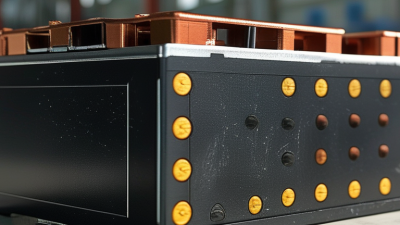
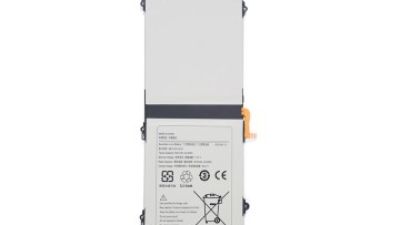
A 7.7V 5221mAh notebook replacement battery provides 40.20Wh of real capacity for stable, dependable daily performance. It is designed for the EB-BW720ABA notebook series and fits according to the original device specifications, requiring no modification during installation. With consistent power delivery, it supports office tasks, business computing, web browsing, multimedia playback, and other routine applications without unnecessary interruptions.
A built-in smart IC chip helps manage charging and provides overcharge protection, while the integrated protection circuit also guards against short circuits and over-discharge. These safeguards support safer, more reliable operation throughout the battery’s service life. When selecting a replacement, verify the battery model, voltage, capacity, connector, and physical dimensions before ordering. This battery is CE, RoHS, and UN38.3 certified and includes a 12–15 month warranty, offering added assurance for everyday notebook use.
Record the notebook model, battery part number, voltage, capacity, connector shape, and cell layout. Measure bay space and cable clearance. Photos alone can mislead.
Yes. The connector may bend sharply or fail to communicate with firmware. Check charging limits and recognition before approving production.
Request datasheets, cell specifications, protection-circuit details, safety records, inspection reports, and batch traceability. Ask for samples from the actual production line.
Install each sample in a notebook and run the same office workload. Record runtime, temperature, charging behavior, standby drain, and connector stability. Compare several units.
Pouch cells usually reduce weight and save space. Cylindrical cells may support simpler cooling. The better choice depends on the notebook’s design and heat path.
Use watt-hours for clearer comparisons. A 50 Wh pack at 11.1 volts provides about 4,500 mAh. Confirm the test temperature and discharge rate.
Ask how the supplier manages overcharging, short circuits, overheating, and swelling. Review protection-circuit information and thermal-test records. Numbers need conditions.
Separate cell, circuit, casing, testing, packaging, and freight costs. Request prices for 100, 500, and 1,000 units. A small trial may expose connector errors.
Confirm storage guidance, shipping conditions, replacement terms, and failed-sample handling. Keep one original battery for comparison. My checklist is useful, but not perfect.
Choosing the best Notebook Battery supplier starts with clearly defining your device model, battery specifications, voltage, connector type, capacity, and compatibility requirements. A reliable supplier should demonstrate strong manufacturing capabilities, consistent production processes, experienced technical teams, and effective quality control. It is also important to verify relevant safety standards, certifications, testing procedures, and reliability records to reduce performance and safety risks.
When comparing suppliers, consider cell technology, actual capacity, cycle life, pricing, minimum order quantities, and the balance between cost and quality. Evaluate whether the supplier can provide customization, protective packaging, labeling, inspection reports, and flexible quality control services. Clear communication, realistic lead times, secure delivery arrangements, transparent warranty terms, and responsive after-sales support are equally essential. By reviewing these factors together, buyers can select a dependable supplier that offers suitable products, stable cooperation, and long-term value.