Leave Your Message
China's battery industry powers a pretty wide range of terminal applications — everything from telecom cabinets to backup power systems and industrial equipment. So in this guide, we'll walk you through the top Terminal Battery manufacturers and suppliers in China, using practical criteria you can actually verify for yourself.
Honestly, a terminal battery has to do a few things well: deliver steady current, keep connections secure, and perform reliably when it's actually out there doing its job. When you're picking one, start with the basics—chemistry, rated voltage, capacity, terminal design, and how long it's expected to last. But site conditions matter, too. Heat, vibration, humidity, and charging that's all over the place can expose weak construction pretty fast. And a battery that looks great in the lab? It might act completely different once it's stuffed inside a crowded cabinet.
Take companies like Narada, Leoch, Sacred Sun, Tianneng, and Chilwee - these are some of the bigger Chinese players. They each bring different product ranges and manufacturing strengths to the table, and honestly, which one fits comes down to your application, not just how large their production is. Buyers should really go through technical datasheets, factory quality procedures, test reports, warranty terms, and export experience. It's also worth checking sample consistency, because even small differences in terminal dimensions or sealing quality can end up causing installation headaches.
A reliable supplier can walk you through capacity testing, plate technology, charging requirements, and traceability—without dodging the tough questions. They should also point you to the certifications that actually apply and give you clear, practical maintenance guidance. That said, let’s be real: no supplier is perfect. Marketing can make things sound better than what you see in the field, and that published cycle life? It may only hold up under ideal conditions. So independent testing and reference checks are still a must. This overview is meant to help you compare manufacturers and suppliers more carefully. At the same time, it’s worth keeping in mind that battery performance isn’t just about product quality—system design matters too.
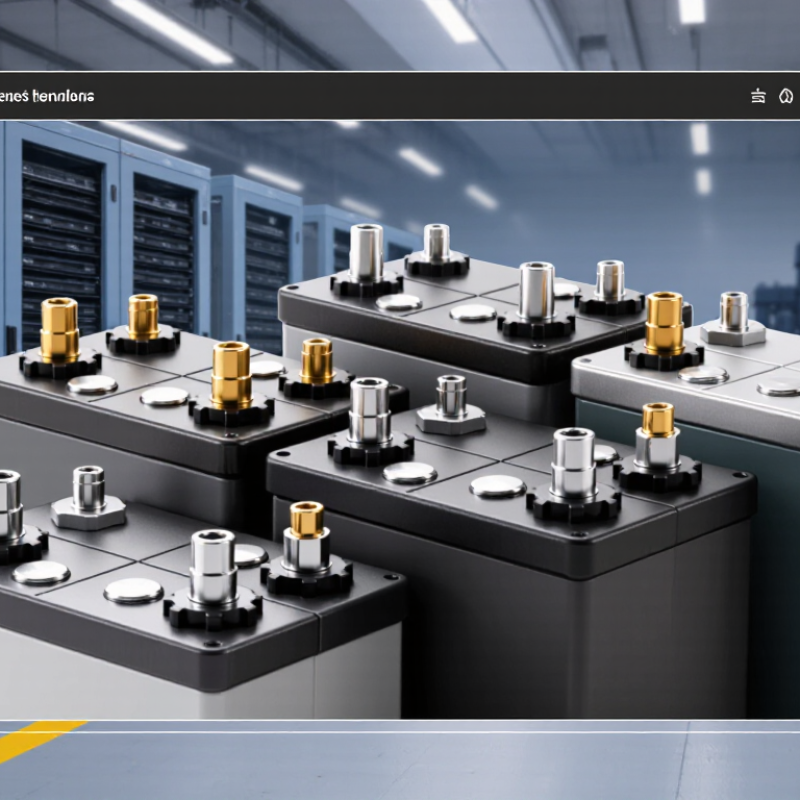
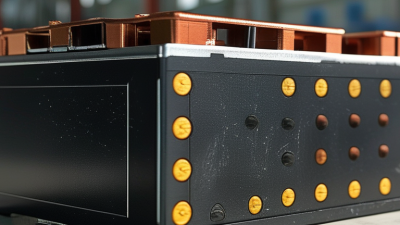
China’s terminal battery industry covers batteries, cells, modules, and complete packs with defined electrical terminals. These terminals connect stored energy to vehicles, backup systems, telecom equipment, and industrial machinery. The scope also includes terminal materials, protective housings, testing services, and battery management components. Definitions can vary between suppliers. A “terminal battery” may describe the connection design, not one chemistry.
China’s market role extends beyond high-volume production. Manufacturers and suppliers support design, assembly, testing, logistics, and after-sales service. Lead-acid, lithium-ion, and other chemistries serve different operating needs. A warehouse backup system may require stable discharge for hours, while a vehicle needs vibration resistance and repeated cycling. Reliable suppliers provide traceable materials, clear datasheets, controlled assembly, and documented safety tests. Field experience matters here. Small terminal defects can cause heat, voltage loss, or early failure. Some specifications remain inconsistent across the industry, so buyers should challenge vague claims.
Tips
Ask for terminal torque ranges, cycle-life conditions, temperature limits, and test reports. Compare results under the same test method. Inspect sample batteries physically, including seals, cable crimping, and label accuracy. Do not judge quality from capacity alone. A stronger review also checks delivery records, complaint handling, recycling arrangements, and production audits. Independent verification is useful when documents look polished but lack raw test data. Even experienced buyers can miss connector compatibility. Record every requirement before approving a supplier.
| Data Dimension | Industry Definition | Typical Data or Classification | Market Role in China |
|---|---|---|---|
| Industry Scope | Battery products equipped with external electrical terminals or terminal posts for charging, discharging, connection, or system integration. | Includes lead-acid batteries, lithium-ion batteries, nickel-based batteries, and stationary storage batteries with screw, post, tab, or connector terminals. | Serves automotive, industrial, telecommunications, renewable-energy, backup-power, consumer, and specialty-equipment markets. |
| Terminal Definition | A conductive interface that connects a battery to an external circuit, busbar, cable, charger, or battery-management system. | Common forms include top posts, side terminals, threaded inserts, bolt terminals, flat tabs, welded tabs, and plug-style connectors. | Terminal design affects installation method, current-carrying capability, polarity protection, serviceability, vibration resistance, and enclosure design. |
| Common Battery Chemistry | Electrochemical system used to store and release electrical energy. | Lead-acid; lithium iron phosphate; nickel-metal hydride; nickel-cadmium; and other lithium-ion chemistries used for specific applications. | Lead-acid remains important for starting and standby applications, while lithium-based systems are widely used where lower weight, higher usable energy, or frequent cycling is required. |
| Nominal Voltage | The approximate voltage assigned to a battery or cell for classification and system design. | Typical lead-acid blocks: 2 V, 6 V, and 12 V; lithium iron phosphate cells: approximately 3.2 V; lithium-ion cells using other cathode systems: commonly approximately 3.6–3.7 V. | Battery packs are assembled in series and parallel configurations to meet equipment voltage, capacity, current, and installation requirements. |
| Capacity Measurement | The amount of charge or energy a battery can deliver under specified test conditions. | Ampere-hours (Ah) are commonly used for battery capacity; watt-hours (Wh) or kilowatt-hours (kWh) are used for stored energy. | Capacity selection depends on load profile, discharge duration, operating temperature, allowable depth of discharge, and required backup time. |
| Key Performance Indicators | Technical parameters used to compare battery suitability and operating performance. | Energy density, power density, cycle life, calendar life, charge acceptance, self-discharge, internal resistance, operating temperature, and terminal resistance. | These indicators influence product selection, total ownership cost, maintenance planning, safety design, and system reliability. |
| Automotive Applications | Batteries used for engine starting, vehicle auxiliary power, traction, and electrified-vehicle systems. | Starting-lighting-ignition batteries; auxiliary batteries; low-voltage vehicle batteries; and high-voltage traction battery packs. | China is a major global automotive and electric-vehicle manufacturing base, creating substantial demand for automotive battery cells, modules, packs, terminals, and related components. |
| Stationary Energy Storage | Battery systems installed at fixed locations to store electricity and provide energy or power when required. | Grid storage, renewable-energy storage, commercial and industrial storage, data-center backup, telecommunications backup, and household storage. | Demand is supported by renewable-energy integration, peak-load management, backup-power requirements, and power-quality management. |
| Industrial and Telecom Backup | Batteries designed to maintain essential loads during grid interruptions or unstable power conditions. | Valve-regulated lead-acid batteries, lithium battery systems, and high-rate backup batteries are commonly used. | Applications include telecommunications sites, uninterruptible power supplies, emergency lighting, control systems, rail infrastructure, and industrial automation. |
| Manufacturing Value Chain | The sequence of activities required to produce and deliver terminal battery products. | Raw materials; active materials; separators; current collectors; cells; terminals; modules; battery-management systems; packs; testing; logistics; recycling. | China has broad manufacturing capabilities across battery materials, cell production, pack assembly, power electronics, testing equipment, and recycling services. |
| Quality and Safety Controls | Processes used to confirm electrical, mechanical, thermal, chemical, and transportation safety. | Terminal torque, contact resistance, insulation, leakage, capacity, short-circuit protection, thermal behavior, vibration, impact, overcharge, and transport testing. | Consistent testing supports reliable integration into vehicles, storage systems, industrial equipment, and international supply chains. |
| Relevant Standards and Regulations | Technical, safety, environmental, and transport requirements applicable to batteries and battery systems. | Examples include IEC battery standards, ISO quality and automotive standards, UN 38.3 transport testing, RoHS requirements, and applicable Chinese national or industry standards. | Compliance affects product design, testing documentation, customs clearance, project qualification, and access to domestic and overseas markets. |
| Terminal Selection Factors | Criteria used to match the terminal interface with the battery, cable, equipment, and operating environment. | Rated current, terminal material, plating, thread size, polarity, connector geometry, corrosion resistance, sealing level, allowable temperature, and fastening torque. | Correct selection reduces contact heating, voltage drop, installation errors, corrosion, loosening, and service downtime. |
| China’s Market Role | Position of China within the global battery manufacturing and supply ecosystem. | Major production, processing, assembly, equipment, engineering, and export capabilities across multiple battery categories. | China functions as a significant manufacturing and supply base for domestic demand and international procurement, while also supporting battery technology development and recycling infrastructure. |
| Procurement Evaluation | Commercial and technical review performed before purchasing terminal battery products. | Evaluate specification compliance, sample testing, production consistency, warranty terms, certification, traceability, delivery capability, after-sales support, and recycling arrangements. | A structured evaluation helps buyers balance purchase price, service life, safety, compatibility, logistics risk, and total cost of ownership. |
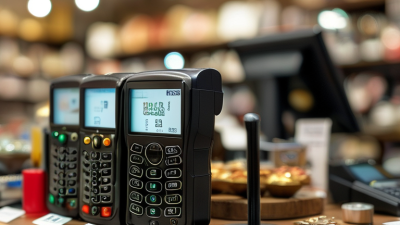
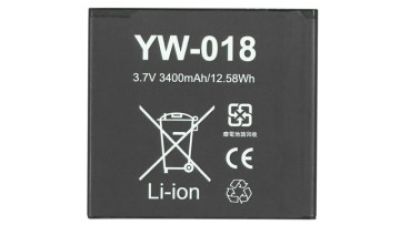
As digital payments continue to expand, dependable power is essential for uninterrupted retail transactions. The World Bank’s Global Findex 2021 reported that 76% of adults worldwide had made or received a digital payment, highlighting the growing need for reliable handheld payment equipment. Designed for a compatible payment terminal, this 3.7V 3400mAh replacement battery delivers 12.58Wh of stable energy for frequent transaction environments. Its fast-charging capability helps reduce downtime, while the integrated protection circuit guards against overcharging, short circuits, and over-discharge.
The Federal Reserve’s 2023 Diary of Consumer Payment Choice found that cash accounted for only 16% of U.S. consumer payments, confirming the continuing importance of card and electronic transaction infrastructure in retail. Built to match the original device specifications, this battery requires no modification and supports consistent operation throughout demanding business hours. Supplied by experienced China-based manufacturers and factories, it is produced with quality-focused processes and supplied with CE, RoHS, and UN38.3 certifications. A 12–15 month warranty further supports procurement confidence for retailers, service providers, and payment-equipment distributors seeking a practical replacement power solution.
It includes batteries, cells, modules, complete packs, terminals, housings, testing, and management components. Definitions vary among suppliers.
Terminals transfer stored energy to vehicles, backup systems, telecom equipment, and industrial machines. Poor connections can cause heat or voltage loss.
Lead-acid and lithium-ion batteries serve different operating needs. Chemistry should match discharge time, cycling demands, temperature, and equipment design.
Ask for datasheets, material specifications, test reports, production photos, and batch traceability records. Raw data matters more than polished brochures.
Check dimensions, terminal alignment, seals, cable crimps, casing quality, labels, and connector compatibility. Look closely.
Review capacity, internal resistance, vibration, temperature changes, leakage resistance, and repeated charging results. Compare all suppliers under identical methods.
A physical visit or live video audit can reveal incoming inspections, assembly practices, warehouse conditions, and storage problems. It is not perfect.
Use one checklist for at least three suppliers. Compare testing, materials, delivery history, warranty terms, response times, and complaint handling.
Confirm replacement procedures, packaging standards, recycling arrangements, response times, and written warranty conditions before ordering. Small omissions become expensive later.
No. A lower price may hide weaker testing, unstable materials, or inconsistent production. I would still verify samples and records.
China’s Terminal Battery industry covers the design, production, testing, and export of batteries equipped with terminal connections for applications such as vehicles, backup power systems, telecommunications, industrial equipment, renewable energy storage, and consumer devices. Chinese manufacturers offer a broad range of technologies, including lead-acid, lithium-ion, AGM, gel, and specialized rechargeable batteries. Major production regions support a coordinated supply chain involving raw material processing, cell and battery assembly, terminal components, packaging, logistics, and technical services.
When evaluating China’s Terminal Battery manufacturers, buyers should assess production capacity, engineering expertise, quality management systems, certifications, product consistency, customization capabilities, and after-sales support. A reliable supplier should provide clear technical specifications, traceable materials, safety testing, and suitable packaging for international transportation. Purchasing decisions should also consider sample approval, inspection procedures, warranty terms, delivery schedules, export documentation, and compliance with destination-market requirements. Careful supplier verification and ongoing quality control can help importers reduce risks, improve product performance, and establish stable long-term cooperation.