Leave Your Message
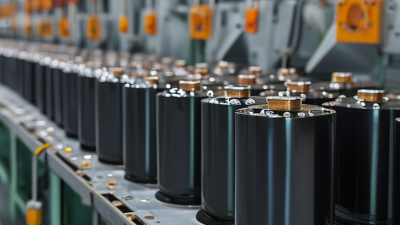
China really plays a huge role in the global Traction Batteries market. According to the International Energy Agency’s Global EV Outlook 2024, China was responsible for nearly 85% of the world’s battery manufacturing capacity. In 2023, they also made up over 80% of the battery cell production. These numbers definitely show the scale of China's industrial power, but we should remember - size doesn’t automatically mean top-notch quality. Just because they produce a lot, doesn’t mean the batteries are necessarily better or more reliable.
Fatih Birol, the Executive Director of the International Energy Agency, summed it up well in the 2023 outlook: “The clean energy economy is quickly becoming a reality – and electric cars are really leading the charge.” His words highlight how fast the EV market is growing, and how important battery performance is because it directly impacts things like driving range, charging times, safety, and operating costs. That’s a really crucial point — just because a factory churns out a lot of batteries, doesn’t tell you how those batteries will perform after a few years of daily use.
Some of China's top manufacturers include CATL, BYD, CALB, Gotion High-Tech, EVE Energy, and Sunwoda. They all have different strengths — some are known mainly for passenger car batteries, while others also supply commercial trucks and industrial equipment. This guide breaks down these companies based on how much they produce, the latest cell technology they use, how far their products reach in the market, and what kinds of applications they’re best suited for. It also looks at things like customer support, reliability, and how long their batteries last — which are sometimes harder to compare than simple market share numbers. Rankings can be helpful, but they’re not perfect. Public data might measure things like installed capacity, shipments, or vehicle deployments differently, so it’s worth taking any ranking with a grain of salt. Ultimately, it’s important to match a manufacturer’s strengths with the specific vehicle, workload, and operating conditions you’re dealing with.
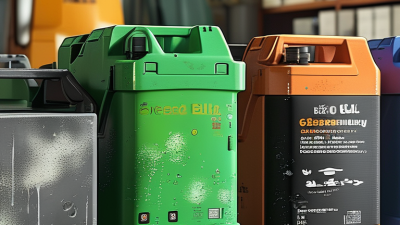
A traction battery supplies the energy that moves an electric vehicle or machine. Unlike a starter battery, it is designed to deliver power over longer operating periods. Common chemistries include lithium-ion and lead-acid, each with different charging needs, maintenance demands, and operating characteristics. The right choice depends on the equipment, workload, and site conditions.
These batteries are used in forklifts, electric buses, warehouse vehicles, automated guided vehicles, and floor-cleaning machines. A forklift may lift pallets through repeated short shifts, while a bus needs dependable range across a daily route. Those patterns affect battery capacity, charging schedules, and expected service life. Real sites are messier than specification sheets suggest. Cold storage, dust, uneven floors, and rushed charging can all change performance.
Tips: Check the machine’s voltage and battery dimensions before selecting a replacement. Match the charger to the battery chemistry, and track operating hours and charging habits. Small records help reveal problems early. Even then, estimates are not guarantees; actual life varies with use and care.
Traction batteries store energy to power a vehicle or mobile machine. This overview compares major battery-manufacturing segments and applications; it does not rank or identify individual manufacturers.
| Manufacturing Segment | Common Battery Chemistries | Typical Applications | Key Design Priorities | Common Trade-Offs |
|---|---|---|---|---|
| Industrial motive-power batteries | Flooded lead-acid, valve-regulated lead-acid (VRLA), and lithium iron phosphate (LFP) | Electric forklifts, pallet trucks, tow tractors, and other warehouse vehicles | Reliable operation across work shifts, compatibility with the vehicle and charger, and manageable charging and maintenance routines | Lead-acid batteries are established and often have a lower initial cost, but are heavy and may require watering and dedicated charging time. LFP batteries generally support faster opportunity charging but require a compatible battery-management system and charger. |
| Electric passenger-vehicle batteries | LFP and nickel manganese cobalt (NMC) lithium-ion chemistries | Battery-electric passenger cars and some plug-in hybrid vehicles | Driving range, safety, power delivery, pack packaging, charging performance, and service life | LFP generally has lower cell-level energy density than many NMC designs and does not use nickel or cobalt in its cathode. NMC can offer higher energy density, while its materials and thermal-management requirements differ by design. |
| Commercial-vehicle and bus batteries | Primarily LFP and NMC lithium-ion chemistries, selected according to vehicle and duty cycle | Electric city buses, delivery vehicles, trucks, and other commercial road vehicles | High daily energy throughput, durability, thermal management, charging strategy, and vehicle-level integration | Battery capacity and chemistry depend on route length, payload, climate, charging access, and operating schedule; there is no single configuration suited to every fleet. |
| Off-highway and mobile-equipment batteries | Lead-acid and lithium-ion chemistries, including LFP | Electric construction equipment, mining vehicles, port equipment, and industrial mobile machinery | Vibration resistance, environmental protection, peak power, operating temperature, and application-specific safety requirements | Equipment duty cycles vary widely. Battery enclosures, cooling, charging systems, and controls must be matched to the machine and working environment. |
| Automated guided vehicle (AGV) and mobile-robot batteries | Lead-acid and lithium-ion chemistries, commonly selected to suit vehicle size and charging pattern | AGVs, autonomous mobile robots, and other industrial transport robots | Compact packaging, predictable runtimes, frequent charging, communication with vehicle controls, and dependable uptime | Lithium-ion systems can support opportunity charging and reduce battery mass, while the complete system requires suitable battery controls and charging equipment. |
It powers the movement of an electric vehicle or machine. Unlike a starter battery, it supplies energy over longer operating periods.
Forklifts, electric buses, warehouse vehicles, automated guided vehicles, and floor-cleaning machines use them. Their daily workloads differ.
Cold storage, dust, uneven floors, and rushed charging can change performance. Real sites can be less predictable than specifications suggest.
Check the machine’s voltage and battery dimensions. Match the charger to the battery chemistry. It sounds obvious, but these details can be missed.
They have different charging needs, maintenance demands, and operating characteristics. The right choice depends on the equipment, workload, and site conditions.
The charger should match the battery chemistry. Track operating hours and charging habits; small records may help reveal problems early.
LFP means lithium iron phosphate. It represented around 40% of the global electric-car battery market in 2023, up from below 10% in 2020. That figure does not describe every vehicle type.
No. Consistent coatings, humidity control, inspections, and pack-level safety checks matter. Capacity alone does not prove quality.
Not by themselves. Vehicle design, climate, and charging habits also affect range. Supplier figures can be hard to compare, so independent testing remains useful.
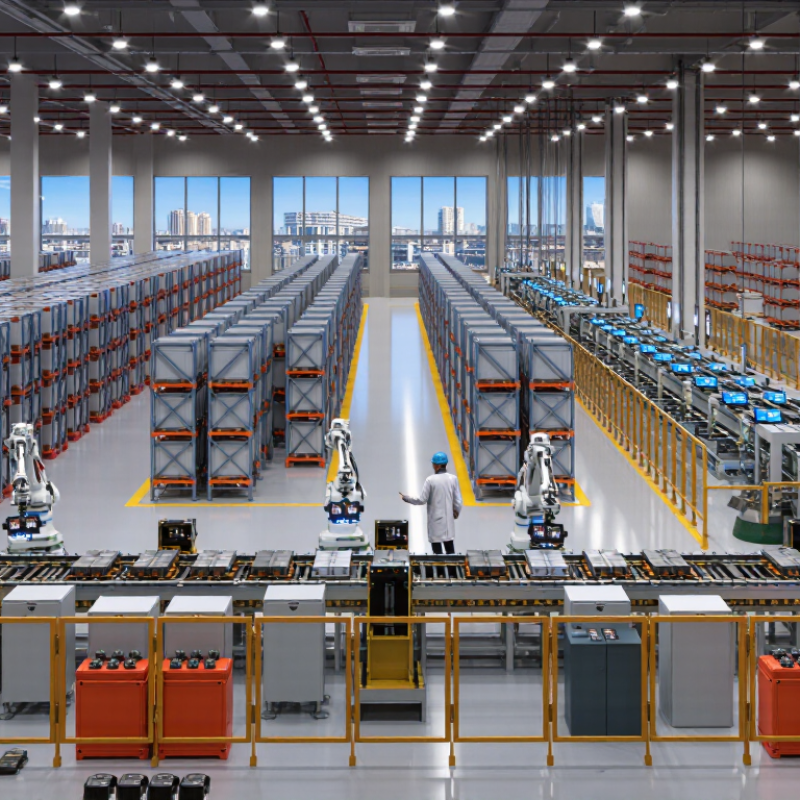
Traction Batteries are essential energy-storage systems for electric vehicles, providing the power needed for propulsion in passenger cars, commercial vehicles, buses, and other applications. China’s industry has grown through investment in large-scale production, research, and a diverse supply chain. Manufacturers are commonly assessed by factors such as battery performance, safety, reliability, production capacity, product range, and ability to support different vehicle requirements.
The industry’s capabilities span cell chemistry, pack design, thermal management, quality control, and manufacturing efficiency. These technologies help suppliers serve markets with varied priorities, from driving range and charging speed to durability and cost. Looking ahead, continued innovation, improvements in safety and energy density, more efficient production, and evolving vehicle demand are likely to shape the development of China’s traction battery sector.