inquiry
Leave Your Message
0%

Energy storage is really entering a quite challenging phase these days. The International Energy Agency reported that in 2023, over 40 gigawatts of new battery storage capacity was added—that's a pretty significant jump. Now, solar and wind projects need systems that can quickly respond, especially after sunset or during times when the weather's calm. BloombergNEF also mentioned that the average price for lithium-ion battery packs hit about $139 per kilowatt-hour last year. Prices are definitely dropping, which is great, but there's still the elephant in the room: our heavy reliance on materials like lithium, nickel, and cobalt, plus the complex supply chains that come with them. It’s not ideal, and it’s something we have to keep an eye on.

Here's an interesting alternative— Lithium Sulphur Batteries. They offer a different kind of design path. Sulfur is pretty abundant and tends to be less expensive than nickel or cobalt. Plus, the theoretical energy capacity of these batteries can go up to about 2,600 Wh/kg—way above what regular lithium-ion batteries usually offer. That could mean lighter storage units, longer-lasting systems, and less weight during transport. The U.S. Department of Energy is actually pretty high on the potential of high-energy-density batteries—they see them as key for future mobility and making our grid more resilient. For remote microgrids, reducing weight can make installation way easier. Honestly, even the small details can make a big difference.

But, let's not get carried away; there are definitely some risks involved. Sulfur tends to expand during charging cycles, and the soluble polysulfides inside the cell can migrate around, which might cut down on usable capacity and shorten how long the battery lasts. Lithium-metal anodes also need careful handling—thermal management and protection are a must. Industry experience shows that just because a battery has great lab results doesn't mean it'll perform reliably in the real world. We need to keep focusing on cycle life, efficiency during charge cycles, safety, and recyclability as key benchmarks. Companies like Sion Power, Lyten, and others are working on these issues, but we still don't have enough independent data from actual field tests. That’s an important gap to acknowledge. So, choosing this kind of chemistry should really depend on proven, real-world performance—not just some impressive numbers on paper.
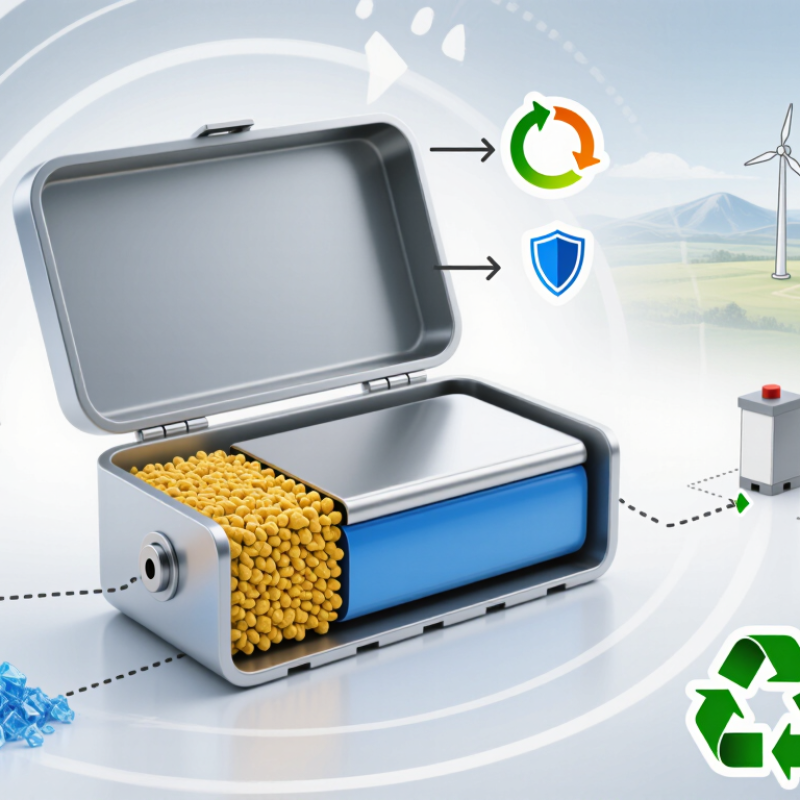
Why Choose Lithium Sulphur Batteries for Energy Storage?

Lithium-Sulphur Battery Chemistry and Operating Principles

Lithium-sulphur chemistry replaces the conventional metal-oxide cathode with sulphur. During discharge, lithium ions leave the anode and react with sulphur, forming soluble lithium polysulphides. These compounds eventually convert into solid lithium sulphide. Charging reverses this pathway. The reaction is powerful, but uneven. Sulphur expands by roughly 80% when fully lithiated, while its electrical conductivity remains poor. A porous carbon host helps distribute particles and limit cracking. The electrolyte must also control polysulphide migration, often called the shuttle effect.

Its theoretical specific energy approaches 2,600 Wh/kg, based on active materials. The Faraday Institution’s lithium-sulphur research reports highlight this unusually high ceiling. The US Department of Energy’s Battery500 programme uses 500 Wh/kg as a development benchmark for advanced cells.

These figures are not equivalent to complete commercial packs. Packaging, electrolyte, safety systems, and inactive materials reduce practical energy density. That distinction matters. A lithium-sulphur cell can look excellent on paper, yet lose capacity during repeated cycling. Laboratory testing often shows progress under carefully controlled conditions, including moderate temperatures and limited charge rates. Field operation is less forgiving. Engineers therefore monitor voltage plateaus, sulphur utilisation, lithium-metal stability, and heat generation. The chemistry remains promising for lightweight storage, but durability still needs honest, long-duration evidence.

Key Advantages of Lithium-Sulphur Energy Storage

Lithium-sulphur batteries attract attention because sulphur is abundant, lightweight, and widely available as an industrial by-product. The U.S. Department of Energy’s Energy Storage Grand Challenge Roadmap identifies a theoretical specific energy near 2,600 Wh/kg for lithium-sulphur chemistry. That figure greatly exceeds conventional lithium-ion values. In practice, real cells remain far below the theoretical ceiling. Still, the potential is meaningful for stationary storage, where lighter packs can simplify transport and installation.

Cost and material security add another advantage. The International Energy Agency’s Global Critical Minerals Outlook 2024 highlights continuing supply risks for lithium, graphite, nickel, and cobalt. Lithium-sulphur designs can reduce dependence on several of these materials. A sulphur cathode could support storage in a grid container, beside a solar farm, or inside a remote microgrid. Fewer constrained materials may improve long-term procurement planning. The chemistry is not mature.

Operational evidence requires caution. Lithium-sulphur cells can suffer from polysulphide migration, lithium-metal instability, and rapid capacity loss during repeated cycling. These effects may increase maintenance needs and reduce project predictability. A 2023 review in the Journal of Energy Chemistry reports substantial progress in protective separators and electrolyte design, but commercial-scale durability remains uneven. That gap matters. Project engineers should compare measured cycle life, round-trip efficiency, safety testing, and temperature performance, rather than relying on headline energy density. Lithium-sulphur is promising, but its strongest advantage may emerge only after manufacturing controls improve.

Energy Density and Weight Benefits of Lithium-Sulphur Batteries

Why Choose Lithium-Sulphur Batteries for Energy Storage?

Lithium-sulphur chemistry offers a striking theoretical advantage. Its specific energy can approach 2,600 Wh/kg at the material level, according to technical battery literature. That figure is far above today’s practical lithium-ion cells. The U.S. Department of Energy’s Battery500 Consortium uses 500 Wh/kg as a demanding cell-level target.

Weight matters. For aircraft, drones, and remote storage units, every kilogram affects range, structure, and installation cost. A lighter battery can carry more usable energy without enlarging the enclosure.

Sulphur also has a low atomic mass and high capacity potential. Yet laboratory results can look better than field performance. Recent peer-reviewed studies have reported lithium-sulphur cells above 400 Wh/kg under controlled conditions. Those results do not guarantee long service life.

The International Energy Agency’s Global EV Outlook 2024 treats energy density as a major battery-performance factor, but system-level packaging still reduces the advantage. Casing, thermal control, current collectors, and safety margins remain heavy.

The chemistry is not a free lunch. Sulphur expands during cycling, while soluble reaction products can migrate inside the cell. These effects may reduce capacity and shorten operating life.

Manufacturing consistency also needs more evidence. A spreadsheet can hide that gap. Engineers should compare complete systems, not active materials alone.

Real decisions need cycle-life data, usable energy, operating temperature, and maintenance requirements. That is where lithium-sulphur storage still feels promising, but unfinished.

Technical Challenges Affecting Lithium-Sulphur Battery Performance

Lithium-Sulphur batteries attract attention because sulphur is lightweight, widely available, and potentially stores more energy than conventional cathode materials. Yet laboratory promise does not guarantee dependable field performance. The chemistry remains difficult to control.

Sulphur conducts electricity poorly, so engineers must add conductive materials and carefully design the electrode structure. During discharge, soluble polysulphides can migrate through the electrolyte. This “shuttle effect” causes active material loss, self-discharge, and lower efficiency. A battery may appear healthy during early tests, then fade after repeated cycling. That result deserves closer inspection.

The lithium-metal anode creates another serious challenge. Uneven deposition can form dendrites, damage the separator, and increase safety risks. Sulphur electrodes also expand and contract during operation, stressing binders and current collectors. Electrolyte consumption can worsen the problem. In practical testing, temperature, pressure, and charging speed strongly influence results. Data from small laboratory cells may not predict large battery modules accurately. This is where comparisons with a Lithium Nmc Battery can become misleading, because the two chemistries age through different mechanisms. Better designs may use protective interlayers, optimized electrolytes, and stronger electrode frameworks. However, each solution adds weight, cost, or manufacturing complexity. The trade-off is still real. Researchers should report full cycle data, energy efficiency, and safety testing, not only peak capacity. Some published results remain difficult to reproduce.

Why Choose Lithium Sulphur Batteries for Energy Storage? - Technical Challenges Affecting Lithium-Sulphur Battery Performance
Technical Dimension Relevant Data or Range Underlying Challenge Effect on Energy-Storage Performance Common Engineering Responses
Theoretical Specific Capacity Approximately 1,672 mAh/g of sulphur Sulphur can accept two electrons per sulphur atom during conversion to lithium sulphide, but this theoretical value is based on active sulphur only. Creates a strong opportunity for high gravimetric capacity, although inactive materials, current collectors, electrolyte and packaging substantially reduce cell-level performance. Increase sulphur utilisation while reducing the mass of conductive additives, binders, excess electrolyte and inactive structural components.
Theoretical Specific Energy Approximately 2,600 Wh/kg for the lithium–sulphur active-material reaction The theoretical figure does not represent a complete rechargeable cell and excludes practical design constraints. Practical pouch-cell energy density is much lower than the theoretical limit and depends strongly on sulphur loading, lithium excess, electrolyte quantity and packaging. Use lean-electrolyte designs, high-loading cathodes, thin separators and limited lithium inventory where safety and cycle life can be maintained.
Sulphur and Lithium Sulphide Conductivity Sulphur and Li2S are electrically insulating; Li2S also has slow initial activation kinetics. Electrons and lithium ions cannot move efficiently through poorly connected active material, especially at high sulphur loading. Leads to incomplete sulphur utilisation, increased polarisation, lower usable capacity and reduced power capability. Build porous carbon or other conductive networks, reduce particle size, improve electrode architecture and apply suitable activation or catalyst strategies.
Polysulphide Shuttle Effect Soluble lithium polysulphides commonly span Li2Sn, where n is approximately 4–8. Intermediate polysulphides can dissolve in the electrolyte, migrate between electrodes and undergo repeated redox reactions. Causes active-material loss, self-discharge, low Coulombic efficiency, capacity decay and possible contamination of the lithium anode. Use polar or functional hosts, chemically modified separators, interlayers, redox catalysts and electrolytes that limit polysulphide solubility.
Cathode Volume Change Sulphur-to-lithium-sulphide conversion can involve roughly 70–80% volume expansion. The active material changes substantially in density and phase during discharge and charge. Repeated expansion and contraction can break electrical contact, damage pores, increase impedance and accelerate capacity loss. Employ expandable porous hosts, elastic binders, hierarchical pore structures and electrode designs that preserve contact during cycling.
Lithium-Metal Anode Instability Typical failure concerns include dendrite growth, dead lithium and continuous solid-electrolyte-interphase formation. Non-uniform lithium plating and stripping can react with the electrolyte and polysulphides, producing an unstable interface. Reduces Coulombic efficiency, increases impedance and may create internal short-circuit or thermal-safety risks. Apply protective interlayers or coatings, regulate current distribution, optimise electrolyte composition and control charging conditions.
Electrolyte-to-Sulphur Ratio High electrolyte content improves wetting but lowers practical energy density; lean-electrolyte operation is more demanding. Excess electrolyte adds inactive mass, while insufficient electrolyte can limit ion transport and reaction completeness. There is a direct trade-off between high capacity, high loading, rate performance, safety and cell-level specific energy. Develop concentrated or localised-high-concentration electrolytes, optimise pore structure and minimise electrolyte while retaining adequate ionic transport.
Sulphur Loading and Areal Capacity Laboratory demonstrations often use low sulphur loading; practical designs generally target several mg/cm² and higher. Thicker cathodes increase ion-transport distance and make uniform reaction distribution more difficult. High loading can reduce capacity utilisation, rate capability and cycle life if the electrode becomes transport-limited. Improve slurry formulation, pore-size distribution, conductive pathways, electrolyte wetting and current-collector design.
Coulombic Efficiency Long-life operation generally requires efficiency very close to 100% each cycle. Even small irreversible losses from the shuttle effect, side reactions and lithium corrosion accumulate over many cycles. Low efficiency causes rapid loss of cyclable lithium and shortens the usable service life of the storage system. Suppress polysulphide migration, stabilise the lithium interface and use electrolyte additives or protective layers that reduce parasitic reactions.
Cycle-Life Target Demonstrated cycle life varies widely; practical stationary-storage designs commonly seek hundreds to more than 1,000 cycles. Capacity fade is influenced by lithium loss, active-material isolation, electrolyte degradation and mechanical damage. Short cycle life can offset the benefit of high specific energy by increasing replacement frequency and lifetime cost. Evaluate full cells under realistic sulphur loading, limited electrolyte, controlled lithium excess, appropriate depth of discharge and relevant temperature conditions.
Rate Capability Lower charge and discharge rates generally improve sulphur utilisation and reduce polarisation. Slow solid-state conversion steps, electrolyte transport limitations and insulating discharge products restrict high-power operation. High current demand may reduce delivered capacity, increase heat generation and accelerate degradation. Use catalytic interfaces, short diffusion pathways, conductive frameworks and battery-management limits tailored to the cell design.
Temperature Sensitivity Low temperature increases electrolyte viscosity and slows reaction kinetics; high temperature accelerates side reactions. Polysulphide conversion, lithium plating and electrolyte stability are all temperature-dependent. Available capacity, power output, safety margin and ageing rate can vary significantly with operating temperature. Use thermal management, temperature-aware charging protocols and electrolytes or interfaces designed for the intended operating range.
Safety and System Integration The use of lithium metal and flammable organic electrolytes requires protection against internal shorts, overheating and overcharge. Uneven lithium deposition, separator damage and parasitic reactions can increase the risk of thermal events. Stationary systems require monitoring, fault isolation, thermal control and validated abuse performance in addition to high energy density. Integrate robust separators, current and temperature sensors, battery-management controls, mechanical protection and system-level safety testing.

Note: Values are representative scientific and engineering ranges. Actual performance depends on cell chemistry, electrode loading, electrolyte formulation, lithium excess, operating temperature, charge protocol and test conditions.

Safety, Cost, and Environmental Considerations

Why Choose Lithium Sulphur Batteries for Energy Storage?

Safety must be assessed beyond the chemistry label. Lithium sulphur batteries can avoid some heavy metals used in conventional cells, but their lithium metal anodes still require careful control. Engineers monitor temperature, pressure, charging speed, and separator condition. A damaged pouch can become a serious hazard. Thermal management remains essential.

Cost is more complicated than cheap raw materials. Sulphur is widely available and often comes from industrial byproducts, which may reduce cathode expenses. However, short cycle life and lithium metal protection can increase replacement and maintenance costs. In a storage facility, frequent cell changes mean more labor, transport, and downtime. The promise is real, but not proven everywhere.

Environmental performance also depends on the full life cycle. An Eco Lithium Battery may reduce reliance on scarce transition metals, yet lithium extraction can consume water and disturb local ecosystems. Recycling systems for lithium sulphur cells are still developing. That gap matters. A battery may look greener on paper while creating new waste problems in practice. Independent testing, transparent sourcing, and clear end-of-life plans should guide purchasing decisions. The technology deserves attention, not blind confidence.

Why Choose Lithium–Sulfur Batteries for Energy Storage?

Lithium–sulfur batteries combine sulfur’s high theoretical capacity with a cobalt- and nickel-free cathode chemistry. The chart compares a representative advanced lithium–sulfur cell benchmark with a typical high-performance lithium-ion cell, while also showing the theoretical active-material capacity of sulfur and graphite.

Safety: Sulfur is non-flammable as a cathode material, but a lithium–sulfur cell can still contain flammable electrolyte and reactive lithium metal. Cell design, separators, thermal management, and battery controls remain essential.
Cost: Sulfur is widely available and avoids nickel and cobalt in the cathode. However, lithium-metal handling, electrolyte requirements, manufacturing yield, and cycle-life improvements still influence the total system cost.
Environmental considerations: Sulfur is commonly recovered as an industrial by-product, and the chemistry can reduce dependence on cobalt and nickel. Lithium extraction, electrolyte production, and end-of-life recycling still require responsible management.

Data context: 500 Wh/kg represents an advanced lithium–sulfur cell-level benchmark reported in research literature; 250 Wh/kg is a representative high-performance lithium-ion cell value. Theoretical active-material capacities are approximately 1,675 mAh/g for sulfur and 372 mAh/g for graphite. Practical performance varies with cell design, loading, electrolyte quantity, operating conditions, and cycle-life targets. Sources: Manthiram et al., Nature Communications 2013; Wild et al., Energy & Environmental Science 2015; Janek and Zeier, Nature Energy 2016.

Applications and Future Development of Lithium-Sulphur Storage

Lithium-sulphur batteries are moving from laboratory research toward practical energy storage trials. Their high theoretical energy density and lighter materials may benefit remote microgrids, residential backup systems, and solar installations. Sulphur is also relatively abundant, which could reduce pressure on some supply chains.

Picture a storage cabinet beside a rural solar inverter. It charges during bright midday hours and powers lights after sunset. However, real performance depends on cycle life, temperature, and usable energy. The polysulphide shuttle effect can cause capacity loss. This remains a serious engineering challenge.

Future development will focus on protective lithium anodes, advanced separators, and porous carbon sulphur hosts. Better electrolytes may reduce unwanted chemical movement inside the cell. Smarter battery management systems could monitor voltage changes and temperature more accurately. Independent safety testing still matters. So does transparent cycle data.

The phrase Deye Lithium Battery may appear in online searches, but buyers should compare technical evidence rather than rely on names. Engineers need results from realistic duty cycles, not only laboratory peaks. Lithium-sulphur technology is promising, yet uneven. Some prototypes perform impressively for a short period and disappoint later. Continued field testing will reveal whether longer life can match the chemistry’s impressive capacity.

3.7V 3400mAh Honeywell SCN-01 Replacement Battery: Reliable Factory Direct Performance

The 3.7V 3400mAh SCN-01 replacement battery is designed to deliver dependable, factory-direct performance for professional data collection equipment. With a real capacity of 3400mAh and 12.58Wh energy output, it provides stable power for extended scanning sessions and helps maintain consistent device operation in demanding warehouse and industrial environments. Its steady voltage supports accurate data collection, while the built-in smart protection circuit helps guard against overcharging, short circuits, and over-discharging.

Engineered to match the original equipment specifications, this replacement battery installs without modification and supports efficient warehouse scanning workflows. Each unit is produced under controlled manufacturing standards and tested for reliable performance, with CE, RoHS, and UN38.3 certifications to support transportation and operational requirements. A 12–15 month warranty provides additional assurance for distributors, equipment operators, and industrial users seeking a practical replacement solution.

FAQS

What makes lithium-sulphur batteries different from conventional lithium-ion batteries?

They use sulphur as the cathode instead of a conventional metal-oxide material. During discharge, lithium reacts with sulphur and forms lithium polysulphides.

How much energy could lithium-sulphur chemistry theoretically store?

Its theoretical specific energy approaches 2,600 Wh/kg for active materials. Real packs store much less because packaging, electrolyte, safety systems, and other materials add weight.

Why is sulphur considered an attractive battery material?

Sulphur is lightweight, abundant, and widely available as an industrial by-product. It may also reduce dependence on several constrained battery materials.

What is the polysulphide shuttle effect?

Soluble lithium polysulphides can migrate inside the cell during operation. This movement wastes active material and can cause capacity loss over repeated cycles.

Why does sulphur expansion create engineering problems?

Sulphur can expand by roughly 80% when fully lithiated. Repeated expansion may crack the electrode and weaken electrical contact.

Can lithium-sulphur batteries already replace current storage systems?

Not reliably in every application. Laboratory results can look impressive, but field performance may decline under heat, fast charging, or repeated cycling.

Where could lithium-sulphur storage be useful?

Possible uses include remote microgrids, residential backup, solar installations, and lightweight storage equipment. Imagine a cabinet beside a rural solar inverter, charging at noon.

What developments could improve lithium-sulphur battery life?

Researchers are developing protective lithium anodes, advanced separators, porous carbon hosts, and improved electrolytes. Better battery management systems may track voltage and temperature more accurately.

What should buyers examine before choosing this technology?

Review measured cycle life, usable energy, round-trip efficiency, temperature performance, and independent safety testing. Headline energy density is not enough.

Why should lithium-sulphur claims be treated cautiously?

Some prototypes perform strongly for a short period and disappoint later. Longer field testing is still needed, and the chemistry remains promising but uneven.

Conclusion

Lithium Sulphur Battery technology is attracting attention as a promising option for next-generation energy storage. It uses sulphur as a cathode material and lithium as an anode, enabling electrochemical reactions that can store substantial amounts of energy. Compared with conventional battery chemistries, it offers the potential for higher energy density and lower weight, which could benefit electric mobility, portable systems, and renewable energy storage. Sulphur is also relatively abundant, making it an appealing material from a cost and resource perspective.

However, several technical challenges still affect performance, including the movement of soluble reaction products, electrode degradation, limited cycle life, and difficulties maintaining stable operation. Safety requires careful control of materials, temperature, and battery design. Environmental advantages may include reduced reliance on scarce resources, although responsible manufacturing and recycling remain essential. Continued research is focused on improving durability, efficiency, charging performance, and large-scale reliability, helping lithium-sulphur storage move closer to wider commercial use.

Charlotte

Charlotte

Charlotte is a dedicated marketing professional with a deep understanding of the technology sector, particularly in the design and R&D of a diverse array of high-quality battery products. With expertise in POS batteries, PDA batteries, laptop batteries, vacuum cleaner batteries, drone batteries, as......
Previous Who Are the Top Traction Battery Manufacturers in China?