
The Critical Role of Portable Power in Industrial Inspection & Drone Operations
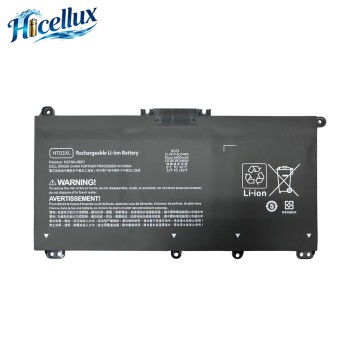
In modern industrial workflows, the synergy between unmanned aerial vehicles (UAVs) and field computing is absolute. Industrial inspection and commercial drones do not operate in a vacuum; they rely heavily on rugged laptops, tablet PCs, and Ground Control Stations (GCS) to execute flight paths, process telemetry, capture real-time thermal imaging, and run complex photogrammetry software. When field technicians deploy to remote environments—such as offshore wind farms, high-voltage power lines, or agricultural fields—the energy reliability of their control equipment is just as critical as the drone's propulsion battery. Deciding to change laptop battery modules before they fail is not merely a maintenance task; it is a vital operational safeguard.
Industrial & Commercial Status: The Evolution of Field Computing Power
The industrial inspection landscape has transitioned from manual, visual checks to automated, AI-driven diagnostics. Commercial drones equipped with optical zoom, LiDAR, and gas-detection sensors generate massive streams of data. The ground-based computer processing this data must operate at peak performance for hours in areas where grid power is non-existent. Over time, the internal batteries of these field laptops and control terminals suffer from capacity loss due to extreme temperatures, constant cycling, and fast-charging stresses.
Today's industrial operators are shifting from reactive maintenance to predictive replacement cycles. Swapping out aging battery packs with premium cells ensures that field missions are never cut short by a sudden system shutdown, which could lead to loss of drone control, corrupted mission logs, or costly project delays.
Key Trends Shaping the Replacement Battery Industry
1. High-Density Lithium Chemistries
Modern field terminals require lightweight, high-energy-density cells. The transition to advanced Lithium-Nickel-Manganese-Cobalt (NMC) and Lithium Iron Phosphate (LFP) chemistries allows replacement batteries to offer longer runtimes and safer thermal thresholds in extreme environments.
2. Intelligent Battery Management Systems (BMS)
Replacement batteries are no longer simple power reservoirs. They feature sophisticated integrated circuits (ICs) that communicate directly with the host operating system. This provides accurate State of Charge (SoC) and State of Health (SoH) metrics, allowing field operators to monitor battery health in real-time.
3. Resistance to Extreme Temperatures
Whether conducting solar panel inspections in desert heat or surveying pipelines in sub-zero Arctic conditions, industrial laptop batteries must perform reliably. Advanced thermal management and ruggedized casings protect the internal cells from thermal runaway and capacity drops.
Deep Application Scenarios of Replacement Batteries
Power Grid & Wind Turbine Inspection
Inspectors use heavy-duty rugged laptops to control drones flying close to high-voltage lines. Electromagnetic interference (EMI) requires the laptop to run at high power to maintain signal filtering. A degraded battery under these conditions will fail rapidly. Replacing the battery with high-capacity, shielded cells ensures stable voltage and uninterrupted signal processing.
Search and Rescue (SAR) & Public Safety
First responders rely on commercial drones for situational awareness. The ground station must remain powered for hours during search operations. Here, a reliable replacement battery is a matter of public safety, ensuring that the critical link between the operator and the UAV is never severed.
Infrastructure & Construction Mapping
Mapping hectares of construction sites requires continuous data uploading and local processing. Ground stations must run intensive GIS software. Having a freshly calibrated, high-performance replacement battery prevents system throttling, allowing the CPU to run at maximum speed to process incoming drone data.